
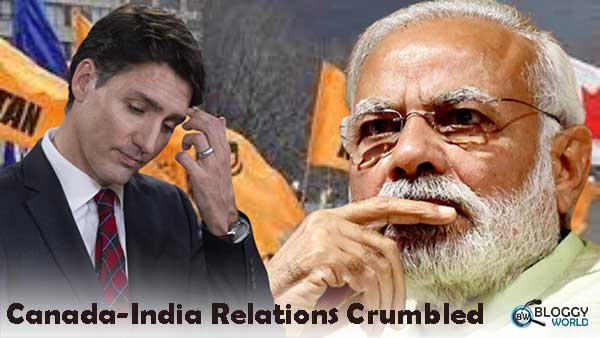
Canada–India relations:
Canada–India relations also referred to as Indo-Canadian relations, historically a blend of trade, cultural exchanges, and shared democratic values, has recently found itself overshadowed by a series of allegations during the G-20 New Dehli Summit, leading to a diplomatic standoff. India and Canada are locked into a diplomatic dispute. Here, we delve deep into the layers of the Canada-India conflict, addressing the reasons, finding the main cause of the Canada-India issue, key players, and the potential future of Indo-Canadian relations.
What is the history of India-Canada relations?
Diplomatic India and Canada relations were initiated in 1947. The enduring bilateral relationship between the two countries is grounded in common values such as democracy, human rights, the rule of law, and cultural diversity.
A Glimpse of History: Canada-India Relations
India and Canada relations have shared decades of friendly ties marked by mutual respect, cooperation, and shared democratic traditions. However, like any two nations with their unique interests, they have experienced their share of disagreements.
In 2011, Canada and India jointly celebrated the “Year of India in Canada,” a significant initiative aimed at fostering stronger ties between the two nations.
From collaborative initiatives such as the “Year of India in Canada” to tense moments involving Sikh separatists and trade discussions, the interactions between these two nations have been multifaceted.
Meanwhile, Differences in perception have long existed between Canada and India relations. An instance was when India condemned a parade float in Brampton, Canada, which portrayed the 1984 assassination of the Indian Prime Minister, Indira Gandhi, in a manner that glorified violence. India’s Foreign Ministry expressed deep concern over the space given in Canada to activities they regard as illegal, such as human trafficking, organized crime, and even murders.
G-20 Summit: A Backdrop to Canada-India News
The diplomatic Canada and India relations faced a new challenge in September 2023 the G-20 New Delhi summit. Instead of holding a one-on-one meeting, the leaders of both nations met on the sidelines. Recently Ottawa paused talks on a proposed trade agreement with Narendra Modi’s government. During their interactions at the G-20 New Dehli Summit, the following issues were raised:
The Khalistan Movement: A Root Cause of Canada-India Conflict
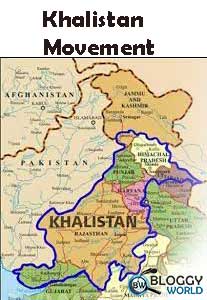
“Khalistan” means “the land of the pure,” but here “khalsa” means that Sikhs, who are a religious group, want to have their own country. Guru Gobind Singh started the Khalsa tradition. They think this country should be in Punjab, a place in northern India where many Sikhs live. Some Sikhs also live in other parts of India and in countries like the U.K., the U.S., and Canada.”
The Khalistan movement, which seeks a separate Sikh state, has been a contentious issue and the main cause of the India and Canada conflict. Canada, with its large Sikh diaspora, has often been a platform for Sikh activism. For India, this (Khalistan movement) raises concerns over Sikh separatism, further complicating Canada-India ties.
Khalistani Protests:
Prime Minister Narendra Modi expressed concerns to Prime Minister Justin Trudeau regarding the Khalistani protests (Khalistan movement) in Canada. This raised the Canada-India conflict between the two countries and affected ongoing trade discussions.
Hardeep Singh Nijjar:
orn in Jalandhar, a district in the North Indian state of Punjab, Hardeep Singh Nijjar embarked on a new chapter in 1997 when he relocated to Canada. There, he built a life, marrying, raising two sons, and pursuing a career as a plumber. Settling in British Columbia, he gained recognition as a vocal proponent of the Khalistan movement. A proposed separate homeland for Sikhs, a religious minority accounting for 2% of India’s population. India had labeled him a terrorist, alleging involvement in activities such as orchestrating the Khalistan Tiger Force (KTF). A banned militant organization in India. Tragically, at the age of 45, Hardeep Singh Nijjar met his demise when two masked gunmen shot him outside a Sikh temple. This incident happened in a Vancouver suburb during a June summer evening this year.
Trudeau alleged “credible allegations of potential link” between the Indian government and the killing of Hardeep Singh Nijjar, without providing evidence during the G-20 New Dehli Summit. This led to further deterioration of diplomatic India-Canada relations.

The Flashpoint: The Canada India Issue and Sikh Separatism
The Canada-India news channels were abuzz when Canadian PM Justin Trudeau voiced allegations against India during the G-20 New Delhi summit. Related to the demise of Sikh separatist Hardeep Singh Nijjar in Canada. India was quick to rebuff Canada’s allegations, setting off a series of retaliatory actions between the two countries.
Justin Trudeau, in a Parliament seating in Ottawa, revealed that Canadian intelligence is diligently searching for any substantial links between Indian government agents and the death of Hardeep Singh Nijjar. Trudeau emphasized that any foreign government’s involvement in the killing of a Canadian citizen within Canadian borders is a serious breach of sovereignty.
“Canada has declared its deep concerns to the top intelligence and security officials of the Indian government,” Trudeau said Monday. “Any involvement of a foreign government in the killing of a Canadian citizen on Canadian soil is an unacceptable violation of our sovereignty.”
Retaliatory Diplomatic Moves:
India and Canada dispute escalated when, in response to Canada’s expulsion of an Indian official tied to the case, India took reciprocal action by expelling a senior Canadian diplomat. Brahma Chellaney, an adviser to India’s National Security Council, remarked, “The damage to the relationship will not be easily repaired.”
The Stalwarts: Trudeau and Modi at the Forefront
Both Trudeau and India’s Prime Minister, Narendra Modi, are influential leaders, representing two of the world’s largest democracies. Their leadership styles and diplomatic choices play pivotal roles in shaping the India-Canada standoff.
Economic Implications of the Dispute:
Canada’s efforts to strengthen its economic relationship with India, the world’s most populous nation, have been hampered by these events. Prior to the recent G-20 New Delhi summit, discussions on a proposed trade treaty between Ottawa and India had been put on hold.
Did India suspend a Canadian visa?
The India-Canada dispute, sparked by allegations and tensions between the two nations, has had real-world repercussions for ordinary people. In response to the allegations made by Canadian Prime Minister Trudeau and the resulting conflict, India suspended visa processing for Canadian citizens, citing “security threats.” This action serves as a stark example of how diplomatic disagreements can directly affect everyday individuals, hampering travel and personal opportunities.
Why is Canada important to India?The Essence of Bilateral Ties
Beyond the Canada India dispute, Canada holds immense significance for India. From trade relationships to a vibrant Indian diaspora and student community in Canada, the two nations are intricately interwoven in multiple dimensions.
A Path to Resolution: Strengthening India-Canada Ties
Amidst the India-Canada dispute, it’s important to remember that they have a strong connection. They share similar values and interests, which means they can work together to solve their issues and help each other grow. So, while things might be tough at the moment, there’s hope that they can sort dispute and make their relationship even better for everyone.
The Future of India-Canada Relations:
With nearly 1.7 million Indians residing in Canada and a significant portion of Canada’s international student body being Indian. The Canada-India conflict between these two nations is too vital to ignore. Both countries benefit from their mutual trade and cultural exchanges. Thus, finding a middle ground is essential for the mutual growth and prosperity of India and Canada.
The Canada-India issue is a testament to the fact that even the strongest of ties can face trials. However, the historic friendship and intertwined destinies of these nations hint at a hopeful future. With open dialogue, understanding, and collaboration, the Canada-India relations can once again thrive.


