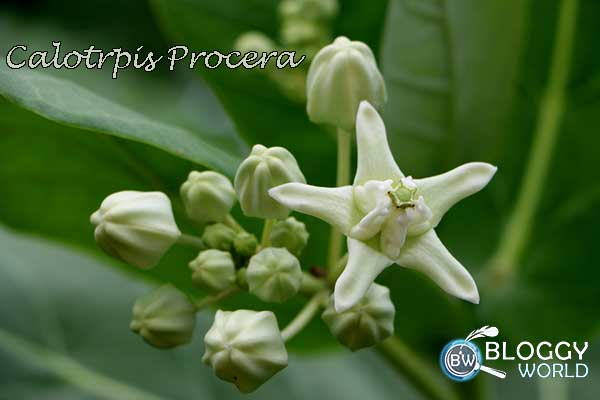
The Crown flower plant, also known as Madar or Arka, is a mysterious character in the plant world. There are two distinct species, Calotropis gigantea, which has purple flowers, and Calotropis procera, which has white flowers. Its various parts, such as leaves, flowers, and roots, have been heroes in traditional medicine stories for ages. But, this is where the plot thickens – there is a hidden villain in this story, and he is known as Milk of the Aak Plant. Beware of the poisonous nature of the Crown Flower Plant.
Nature’s Organic Irritant:
The organic irritating poison plant is known as the crown flower plant. It has thick, oblong-shaped green leaves. Due to its natural nature, this plant can be found in a variety of locations. It is most frequently seen in China, Pakistan, India, Indonesia, Sri Lanka, Nepal, and Thailand.
Calotropis, popularly known as “Aak” or “milkweed“, is a member of the Apocynaceae family. Because different plant portions release white, sticky latex, this genus of plants is known as “milkweed“.
The Aak plant is very beneficial to health. All parts of the Aak plant are used in “Ayurveda” for its medicinal properties. In addition to its health benefits, this plant has a secret enemy, known as Milk of the Oak Plant.
Is the AAK plant poisonous?
All components of the “Crown plant“, including the stem, roots, and leaves, are poisonous. The toxic compounds of Aak plants/Crown flowers are, callotropoxin, calotropin, callactin, Cardenolide glycosides and callotropage.
- Aak plants contain a milky sap that, while appearing harmless, holds a hazardous secret.
- One of the unfavorable components is heart glycosides, which can cause significant harm, especially to the eyes.
- Another concerning substance in Aak plants is Cardenolide glycosides, known for mimicking the effects of Digoxin.
- These Cardenolide glycosides can pose serious risks to heart health and may lead to cardiotoxicity.
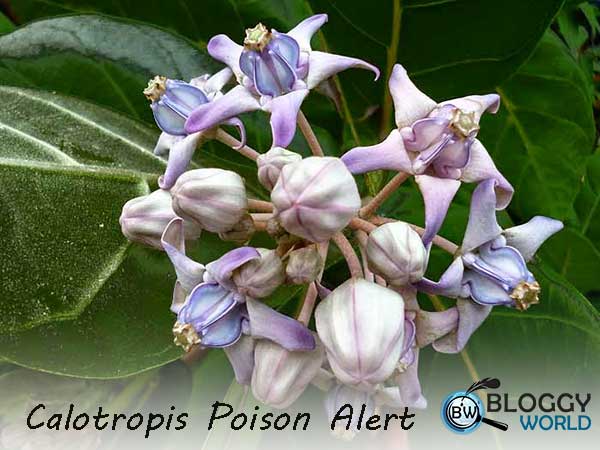
Signs, Symptoms, and Survival Tips:
A potential for the poisonous nature of crown flowers that can have severe consequences when mishandled.
Pungent Bitter Taste:
The taste of the Madar plant (Calotropis gigantea) is sharp and bitter, indicating a unique flavor that may indicate the presence of substances that are not good for our digestive systems.
Vision Loss:
Due to the latex’s extreme toxicity to human eyes, it can cause ocular toxicity, photophobia, and vision loss.
Gastrointestinal Cerebrospinal Poison:
The Madar plant (Calotropis gigantea/Calotropis procera) becomes a gastrointestinal cerebrospinal toxin when someone consumes it internally. which raises questions regarding the effects it may have on the nervous and digestive systems.
Burning Pain in the Throat and Stomach:
A toxic encounter with the Madar plant (Calotropis gigantea/Calotropis procera) brings about burning pain. An unsettling sensation grips the throat and stomach, intensifying the urgency of understanding its potential risks.
Nausea:
As the toxicity progresses, the body responds with nausea. It is a physiological warning that underscores the need for caution in dealing with this seemingly versatile plant.
Vomiting:
The poisonous nature of the Crown flower/Madar plant manifests in the form of vomiting. It is a natural defense mechanism by the body to expel harmful substances.
Diarrhea:
Crown Flower toxicity may lead to diarrhea. It exacerbates the distressing symptoms experienced by those who have unwittingly crossed paths with this perilous plant.
Dilated Pupils:
If someone has consumed the Madar plant their pupils (the black part in the middle of the eye) look bigger than usual. It’s a clear sign that something harmful from the plant is affecting their eyes. This is one of the worrying symptoms to watch out for.
Salivation:
Excessive salivation becomes a noticeable symptom. It indicates the body’s attempt to rid itself of the toxic elements introduced by the Madar plant.
Restlessness:
Toxicity-induced restlessness becomes a psychological manifestation of the plant’s impact, heightening the urgency for intervention.
Breathing Problem:
Breathing issues could arise as the toxicity increases, emphasizing the potentially lethal effects of coming into contact with a Madar plant.
Muscle Spasms:
In extreme situations, the harmful impact of the Crown flower/Madar plant can lead to strong muscle spasms. It can put the person’s health at serious risk.
Death:
In the most extreme cases, the encounter with cardenolide glycosides poisoning present in the Madar plant may result in death. Underscoring the importance of understanding its potential dangers.
Immediate Fatality with Madar Root Powder:
A particularly alarming revelation is the immediate fatality associated with using Madar root powder as snuff. It emphasizes the urgency of awareness and caution.
This journey through the toxic potential of the Aak plant, Calotropis procera serves as a stark reminder that not all plants are benevolent. Understanding the signs and symptoms associated with Madar plant toxicity is crucial for ensuring the safety of those who may come into contact with this enigmatic and potentially perilous botanical entity.
So, as we embark on this journey through the tangled vines of plant revelation, remember – it’s not just a plant. It’s a fascinating story with twists and turns that might blow your mind. Stay tuned to unfold the story of Crown Flower Plant. where caution becomes the hero of the story!
In the realm of natural remedies, the Aak plant unfolds as a cautionary tale. Although the use of the Aak plant in cultural practices is very deep. Despite its cultural use, its milk is still a risk. As we navigate the world of herbal remedies, it becomes imperative to balance the potential benefits with a keen awareness of the lurking dangers. Especially, when it comes to the vision-threatening implications of Aak plant milk.
“Keep in mind that natural products are not always necessarily safe and dosages can be important“.