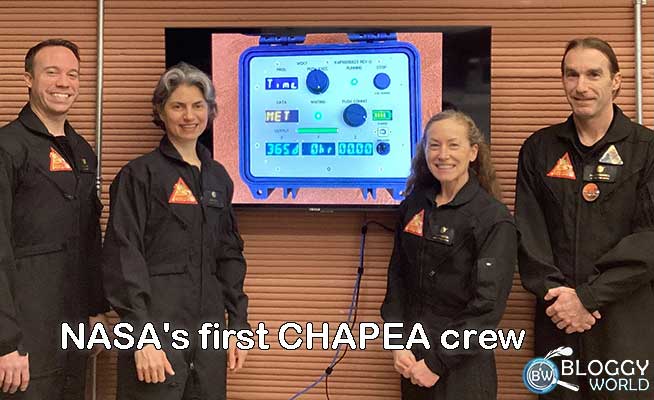
Four volunteer crew members spent over a year in NASA simulated Mars habitat at Johnson Space Center in Houston, future human missions to Mars. NASA crew exit stimulated Mars habitat on Saturday (6 July) around 5 p.m. EDT.
Kelly Haston, Anca Selariu, Ross Brockwell, and Nathan Jones entered the 3D-printed simulated Mars habitat on June 25, 2023. They were the first crew for NASA’s Crew Health and Performance Exploration Analog project.
Life Inside the Habitat:
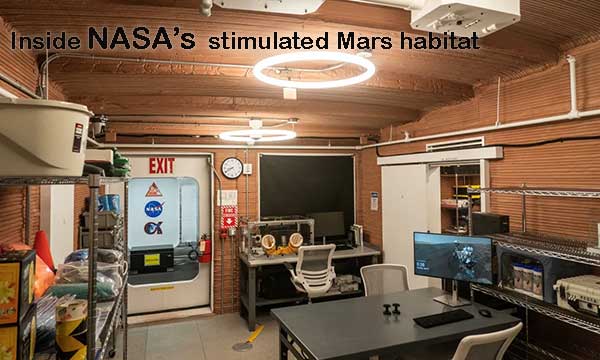
On June 25, 2023, Kelly Haston, Anca Selariu, Ross Brockwell, and Nathan Jones entered a 3D-printed NASA simulated Mars habitat. The simulated Mars habitat, which is 1,700 square feet (157 square meters) in size, was designed to copy conditions on Mars. The fourth planet from the sun. This simulation aimed to prepare for future human missions to Mars, a topic that interests both scientists and science fiction fans.
Mission Goals and Activities:
CHAPEA (NASA’s Crew Health and Performance Exploration Analog) crew focused on establishing potential conditions for future human missions to Mars. They performed simulated spacewalks, referred to as “Marswalks,” and grew and harvested vegetables to supplement their provisions. Maintaining the habitat and their equipment was also a significant part of their mission. The crew faced challenges similar to what a real Mars crew might experience, including limited resources, isolation, and communication delays of up to 22 minutes with Earth.
Future Missions:
NASA plans two additional CHAPEA (NASA’s Crew Health and Performance Exploration Analog) missions. NASA’s mock Mars mission with future crews will continue conducting simulated spacewalks. Furthermore, they will gather data related to physical and behavioral health and performance. Steve Koerner, deputy director of Johnson Space Center, noted that most of the first crew’s experimentation focused on nutrition and its impact on performance. Furthermore, he emphasized that this research is crucial for preparing to send people to future human missions to Mars.
After emerging from the habitat astronaut Kjell Lindgren knocked on the door. The four volunteers expressed their gratitude for each other and the support from those outside. They shared lessons learned about a future manned mission to Mars and sustainable living on Earth. For example, Ross Brockwell, the crew’s flight engineer, highlighted the importance of living sustainably for everyone’s benefit. Moreover, he emphasized that using resources wisely and reducing waste is essential for achieving and maintaining important goals like exploring other worlds.
The Importance of Mars Exploration:
Science officer Anca Selariu addressed why people are so interested in Mars. She explained that space exploration is possible and can bring people together, showing the best of humanity. Furthermore, she believes that exploring Mars is an important step for Earthlings, lighting the way for future generations.
NASA’s Vision:
Steve Koerner emphasized NASA’s vision by saying, “Mars is our goal.” He explained that the CHAPEA project is a crucial step for America to become a leader in space exploration. This Mars stimulation project has given us important information and prepared us for future human missions to Mars. This NASA crew exit Mars habitat shows NASA’s dedication to exploring space.
The second CHAPEA mission will begin in 2025 and the third in 2026.