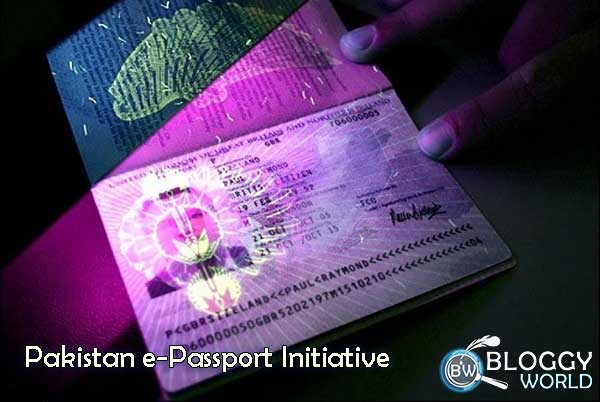
What is an e-Passport?
An e-Passport in Pakistan is an enhanced version of the traditional passport. Specifically, Pakistan started issuing e-passports on March 30, 2022. An e-passport, also known as an electronic passport, includes an embedded electronic chip. This chip contains the same information that is printed on the passport’s data page, such as the passport holder’s name, date of birth, and other personal details. Additionally, the chip holds a biometric identifier, like a digital image of the holder’s face, fingerprints, or iris scan. Consequently, this technology enhances security and helps verify the passport holder’s identity more accurately and quickly during border crossings.
Types of e-Passports:
- Ordinary e-Passport: Issued for regular travel.
- Official e-Passport: For government officials.
- Diplomatic e-Passport: For diplomats and high-ranking officials.
Difference Between a Traditional Passport and an e-Passport:
A traditional passport is a paper booklet with printed personal information, while an e-passport includes an embedded electronic chip with biometric data for enhanced security.
| Feature | Traditional Passport | e-Passport |
|---|---|---|
| Data Storage | Printed on the passport | Embedded microchip |
| Security Features | Basic (watermarks, etc.) | Advanced (digital signatures, biometrics) |
| Verification | Manual inspection | Automated and electronic reading |
| Processing Time | Generally slower | Faster at automated gates |
| Forgery Resistance | Lower | Higher |
Eligibility Criteria:
- Citizenship: Must be a Pakistani citizen.
- Age: Both minors and adults can apply.
- Previous Passport: No need for a previous passport, but having one can expedite the process.
What is the procedure for an e-passport?
Applying for an e-passport in Pakistan involves several steps and requires specific documents. Here’s a comprehensive guide about the application Process and Fees for e-Passport in Pakistan:

1. Prepare Required Documents
For Adults (18 years and above):
- CNIC/NICOP: Original and photocopy of Computerized National Identity Card (CNIC) or National Identity Card for Overseas Pakistanis (NICOP).
- Previous Passport: Original and photocopy (if applicable).
- Birth Certificate/Matriculation Certificate: Original and photocopy.
- Guardian’s CNIC: If applicant’s CNIC is new or just issued.
- Photographs: Usually taken at the application center.
- Bank Challan/Receipt: Proof of payment of fee.
For Minors (Below 18 years):
- B-Form/Birth Certificate: Original and photocopy.
- Guardian’s CNIC: Original and photocopy.
- Previous Passport: If applicable.
- Photographs: Usually taken at the application center.
- Bank Challan/Receipt: Proof of payment of fee.
2. What is the fee for e-passport in Pakistan 2024?
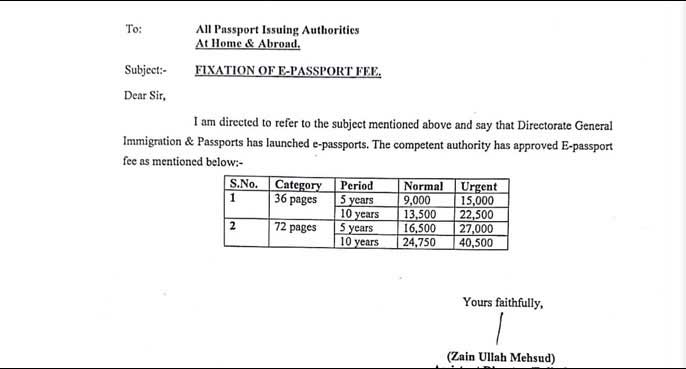
You can pay the e-Passport fee in Pakistan at designated banks or online. The fee varies based on the type of e-passport and urgency (normal or urgent).
| Passport Type | Validity | Standard Fee | Urgent Fee |
|---|---|---|---|
| 36-page e-passport | 5 years | Rs 9,000 | Rs 15,000 |
| 72-page e-passport | 5 years | Rs 16,500 | Rs 27,000 |
| 36-page e-passport | 10 years | Rs 13,500 | Rs 22,500 |
| 72-page e-passport | 10 years | Rs 24,750 | Rs 40,500 |
You can pay e-passport fees online in Pakistan using the Passport Fee Asaan App or the e-Payment Web Portal.
3. Visit the Passport Office?
Go to the nearest Regional Passport Office (RPO) or Central Passport Office with your documents and fee receipt. Key offices are located in major cities like Islamabad, Karachi, Lahore, etc.
Steps at the Passport Office:
- Token: Collect a token number.
- Biometric Data: Provide fingerprints and photograph.
- Data Entry: Fill in the application details with an official.
- Verification: Verify the entered data.
- Approval: Await approval from the relevant authorities.
- Receiving Slip: Obtain the slip for passport collection.
4. Track Application Status:
Track the status of your passport application online through the Directorate General of Immigration & Passports (DGIP) website.
5. Collect Your e-Passport:
Once ready, collect your e-passport from the same office where you applied, presenting your slip and CNIC.
Processing Time:
- Normal: 10-14 working days.
- Urgent: 4-7 working days.
Renewal and Lost e-Passport:
- Renewal: Follow the same steps as a new application but provide your expired passport.
- Lost e-Passport: Report to the police and get a FIR. Apply for a new passport with the FIR and other required documents.
Using an e-Passport:
- At the Airport: Place your e-passport on the reader at automated gates, which will scan the chip and verify your identity using biometric data.
- Immigration Control: Immigration officers use special devices to read the chip and verify the information against the database.
Useful Contacts:
- Helpline: +92-51-111-344-477
- Email: info@dgip.gov.pk
- Official Website: DGIP
FAQs
1. How do I apply online?
Currently, online applications for Pakistan e-passports are not available.
2. Can I expedite the process?
Yes, by paying the urgent fee.
3. Are there any restrictions on who can apply for Pakistan e-passport?
No specific restrictions apart from standard eligibility criteria.
4. What happens if the chip fails?
The passport can still be used like a traditional passport, though you may face manual processing at borders.
5. How secure is my data?
Data on the chip is protected by advanced encryption and is only accessible to authorized systems.
6. Can I get an e-passport if I already have a traditional passport?
Yes, you can apply for Pakistan e-passport even if you have a traditional passport, but you cannot hold both valid at the same time.
7. Do all countries accept e-passports?
Most countries now accept Pakistan e-passports due to their compliance with ICAO standards. E-Passports are already being used in over 150 countries around the world.
Applying for an e-passport in Pakistan involves several steps. First, prepare the necessary documents. Next, pay the e-passport fee. Then, visit the passport office for data submission and biometric capture. After that, wait for processing. For detailed and up-to-date information, always refer to the official DGIP website or contact their helpline.