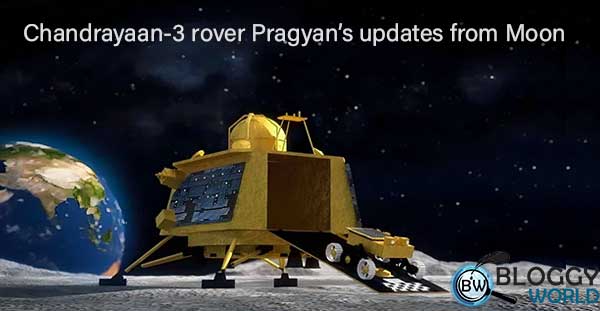
In the story of space exploration, something big happened on August 23rd. India did something amazing with the Chandrayaan-3 moon mission. This lunar mission was a huge success. Chandrayaan-3 became the first spacecraft to land near the lunar south pole. This made India the fourth country to achieve something like this on the moon.
It’s like a big achievement in a space history book. Chandrayaan-3‘s success shows how good India is at space stuff. The lunar south pole is a tricky place to land, and India did it well.
Objectives of Chandrayaan Moon Mission:
The monumental touchdown of Chandrayaan-3’s Vikram lander near the lunar south pole signifies a leap forward in India’s space capabilities. This achievement not only showcases the Indian Space Research Organization’s (ISRO) expertise but also underscores the nation’s presence in the space exploration arena.
This mission had many goals that directed its path. It wanted to show how to land safely and softly on the moon, explore with a rover, and do science experiments right there on the moon. Two of these goals are already done – the safe landing and the rover exploration. Now they are working on the third goal, which is doing science experiments on the moon’s surface.
Exploring the Moon’s Secrets: Chandrayaan-3 Rover Adventure
Chandrayaan-3 moon mission didn’t stop after landing. It sent out a rover named Pragyan to explore the moon’s bumpy surface. This rover has special cameras that show us cool things about the moon, like its interesting features and mysterious beauty.
Lunar Surface Temperature Revelation:
On August 27th, ISRO unveiled a temperature graph that took experts by surprise. The Laser-Induced Breakdown Spectroscope instrument aboard the Pragyan rover reported temperature variations on the lunar surface, highlighting unexpectedly high temperatures. The Chandra’s Surface Thermophysical Experiment (ChaSTE) payload’s meticulous temperature readings near the pole were especially intriguing. ISRO scientist B H M Darukesha’s disclosure of the recorded 70 degrees Celsius temperature, far surpassing expectations, added an element of astonishment.
Racing Against Time: Pragyan Rover’s Mission
While scientific exploration progresses, the Pragyan rover faces a time-sensitive challenge. With only 14 days allocated – equivalent to one lunar day – the rover is on a mission to maximize its exploration of the uncharted terrain at the South Pole. Four days have already passed, emphasizing the significance of optimizing experiments and research within the remaining ten days. ISRO’s dedication is paramount in this endeavor, as Nilesh M Desai, Director of the Space Applications Centre, highlighted.
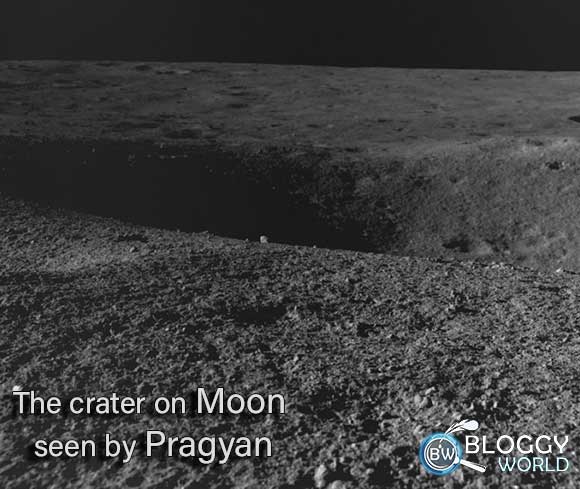
Chandrayaan-3 Rover: Moon Discoveries of Different Elements
On August 30th, a cool thing happened with the Chandrayaan-3 rover. It used a special tool called the Laser-Induced Breakdown Spectroscope to find sulfur near the moon’s south pole. They also discovered other stuff like Aluminum, Calcium, Iron, Chromium, Titanium, Manganese, Silicon, and Oxygen. They’re still searching for Hydrogen to learn even more about the formation moon.
National Space Day Celebration:
Prime Minister of India Narendra Modi’s announcement added an emotional touch to the mission. The Vikram lander’s landing site was christened ‘Shiv Shakti Point‘, symbolizing strength and achievement. The site of Chandrayaan-2’s 2019 crash landing was named the “Tiranga Point”, showcasing India’s resilience. Additionally, August 23rd, the day of Chandrayaan-3’s successful lunar touchdown, is now celebrated as ‘National Space Day‘, commemorating India’s contributions to space exploration.
In conclusion, the Chandrayaan-3 moon mission stands as a testament to India’s advancements in space technology, unveiling lunar secrets, and commemorating historic milestones. As the mission propels forward, it promises to leave an indelible mark on space exploration and inspire future generations.