
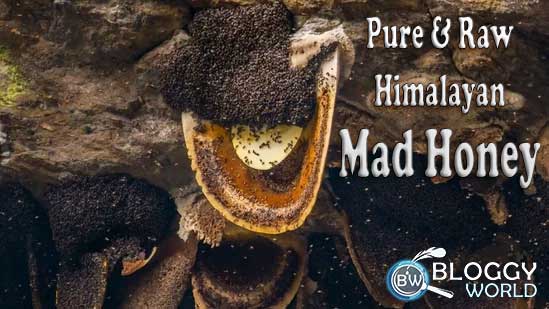
What is Mad Honey?
Mad honey (Grayanotoxinhas) has a slightly bitter taste and a reddish color. It is derived from the nectar collected by bees that feed on particular types of rhododendron plants. These plants thrive in Himalayan mountainous areas, on the mountainsides of Nepal, and Turkey, particularly in the regions surrounding the Black Sea. Throughout history, wild cliff Himalayan honey has been utilized by individuals for recreational, medicinal, aphrodisiac, and even military applications and also has poisoning/intoxicating effects. Mad honey, an intriguing and unique type, has captured the attention of many due to its fascinating properties.
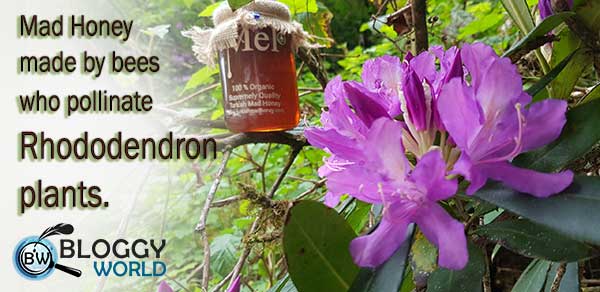
Poisoning/intoxicating effects of mad honey, Can Himalayan it kill you?
- Mad honey can have both mild and strong effects depending on the amount consumed.
- Mild effects include dizziness, lightheadedness, and feelings of happiness.
- Excessive consumption can lead to hallucinations, vomiting, fainting, seizures, and, rarely, death.
- The first recorded case of mad honey poisoning dates back to 401 BC, and it has been used as a weapon in ancient times.
- Symptoms of mad honey poisoning are generally scary but rarely fatal.
- Grayanotoxin is the main toxic substance in mad honey and can affect the heart.
- Common physical symptoms include slow heartbeat and low blood pressure.
- The toxin stimulates certain heart nerves, causing blood vessels to widen and reducing sympathetic nervous system activity.
- Patients may experience chest heaviness, changes in the heart’s electrical activity, and reduced oxygen supply to the heart muscle.
- Some cases of its consumption have resulted in heart attacks or heart muscle damage.
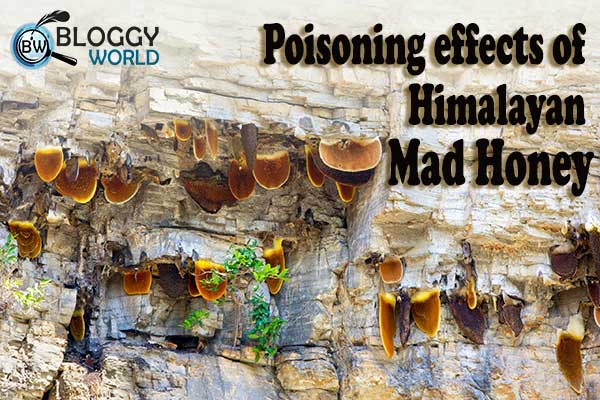
Uses of Himalayan Honey:
The uses of mad honey can vary, and it has been historically employed for different purposes. Here are some notable uses:
- Recreational Use: Mad honey has been consumed in small quantities for recreational purposes. Some individuals have sought out the unique effects of mad honey, such as its intoxicating and hallucinogenic properties.
- Medicinal Purposes: In traditional folk medicine, mad honey has been used for various health-related issues. It has been employed to treat digestive problems and respiratory conditions, and even as an aphrodisiac in some cultures.
- Cultural Practices: Mad honey holds cultural significance in certain regions where it is found. It may be used in rituals, ceremonies, or as a traditional remedy passed down through generations.
- Culinary Applications: In culinary contexts, honey can be incorporated into certain dishes or used as a flavoring agent.
- Research and Study: Wild Cliff Himalayan honey’s effects have drawn the attention of researchers and scientists who are trying to solve the mystery of its chemical composition and potential medicinal properties.
6. Aphrodisiac: This honey has been commonly used as an aphrodisiac (sexual stimulant)
Aphrodisiac use of Honey:
In 2003-04, South Korea imported more than 8000 kg of mad honey from Nepal for Aphrodisiac use. However, the Korean government later imposed a ban on further imports in 2005. Despite the ban, cases of Grayanotoxin honey intoxication have been reported in South Korea. This is mainly due to illegal imports and direct purchases made by Korean travelers in Nepal. It is noteworthy that middle-aged men often use this raw and pure honey to enhance their sexual performance. While commercial honey is generally considered safer, there is a risk of contamination, as the large-scale production and distribution of honey can sometimes dilute the toxins present. Wild cliff Himalayan honey intoxication cases have been reported in various countries worldwide.
How does honey affect the body?
In Turkey, there are approximately twelve incidents of honey poisoning/intoxication reported annually. According to a study published in Cardiovascular Toxicology in 2012, fatalities caused by the substance are uncommon among humans, although instances of animal deaths have been documented.
History of Mad Honey:
- Ancient Accounts: In 401 BCE, Greek soldiers encountered honey in the Turkish town of Trabzon and experienced its potent effects, as described by the philosopher Xenophon in his book Anabasis.
- Greek Soldier’s Experience: Greek soldiers who consumed the honey lost their senses, experienced vomiting, and purging, and were unable to stand upright. Some soldiers appeared heavily intoxicated, while others exhibited symptoms akin to madness or near death. However, they recovered within a few days.
- Roman Encounter: In 67 BCE, Roman soldiers pursuing King Mithridates of Pontus and his Persian army fell victim to intentional honey poisoning. The Persians strategically left behind wild Himalayan honey as a bioweapon. The Roman troops consumed the honey, became disoriented, and were subsequently attacked by the Persians, resulting in significant casualties.
- European Influence: In the 18th century, merchants from the Black Sea region began selling honey infused with liquor to Europeans. This allowed Europeans to experience the milder effects of Himalayan honey in a controlled manner.

Treatment:
- Untreated Grayanotoxin honey Poisoning/intoxicating effects symptoms can last for approximately a day, with the gradual recovery of mental status taking several days.
- Treatment for mad honey Poisoning/intoxicating effects focuses on symptom management.
- Saline infusion is used for treating dizziness and mild low blood pressure.
- Severe low blood pressure and slow heartbeat may require atropine.
- In rare cases of unresponsiveness to saline and atropine, temporary cardiac pacing may be necessary to eliminate toxins from the body.
- Epinephrine or dopamine infusion and transvenous pacing can be considered if initial treatments are insufficient.
- Hospital admission is generally not required, and around six hours of monitoring is usually sufficient for stabilization.
Cost of Mad Honey?
The Guardian reported that a kilogram of high-quality honey can sell for about $360 in shops around Turkey, while National Geographic noted that a pound of the best Himalayan honey goes for about $60 on Asian black markets. In general, the value of mad honey is much higher than regular honey.
Is it legal to consume mad honey?
Currently, honey producers in Nepal and Turkey continue to collect Himalayan honey, although it accounts for only a small portion of their overall honey output. These two countries permit the production, sale, and export of Grayanotoxin. However, in several other countries such as South Korea, the substance is considered illegal and its production was prohibited in 2005.







1 comment