Can Electric Vehicle Charge on the Road?
World’s first permanent vehicle-charging electric road system to be built in Sweden. This innovative system aims to revolutionize the way we travel and reduce our dependence on fossil fuels. Sweden’s highway network is building the world’s first permanent wireless charging road system in the country by 2025, which will allow electric vehicles to charge as they drive. In recent years, the world has witnessed significant progress in the development of electric vehicles (EVs). However, the adoption of EVs has been slow due to the lack of charging infrastructure and the limited driving range of batteries. Claes Erixon, Scania’s Executive Vice President Research and Development says,
“Vehicle electrification is developing quickly and with its environmental, social, and cost benefits, it will play an important role in the shift to a fossil-free transport system,”
Types Of Electric Road Systems:
Electric road systems (ERS) provide a way of powering and charging an electric vehicle as it is driving along a road. There are three main types of ERS:
- Overhead lines: Electric railways and trams often use these, and they may also use them along highways to power heavy commercial vehicles.
- Conductive track: The installation of conductive metal tracks on or in the surface of a road, or sometimes along the side of the road, creates conductive tracks.
- Inductive track: Buried conductive coils are installed below the surface of the road, and they induce an electric current in a coil on the bottom of the car.
Governments and authorities in Germany, Italy, and Sweden are actively supporting research projects, with the ultimate aim of building an electrification infrastructure that could cover parts of the highway network in Europe with this green technology.
How it Works:
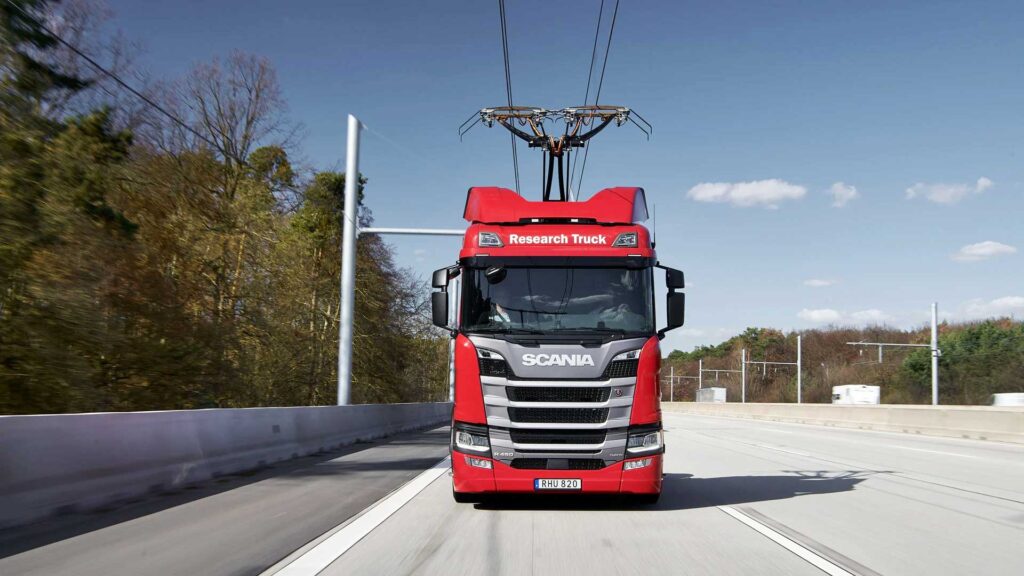
Overhead lines are a cheap and well-established type of electric road system (ERS). Two conductive lines suspended over the road at a height of around 5 meters, allowing for long stretches of over 1 kilometer to be electrified. However, only large commercial electric vehicles with a pantograph can use this system. It has been tested on public highways in Sweden and Germany since 2016.
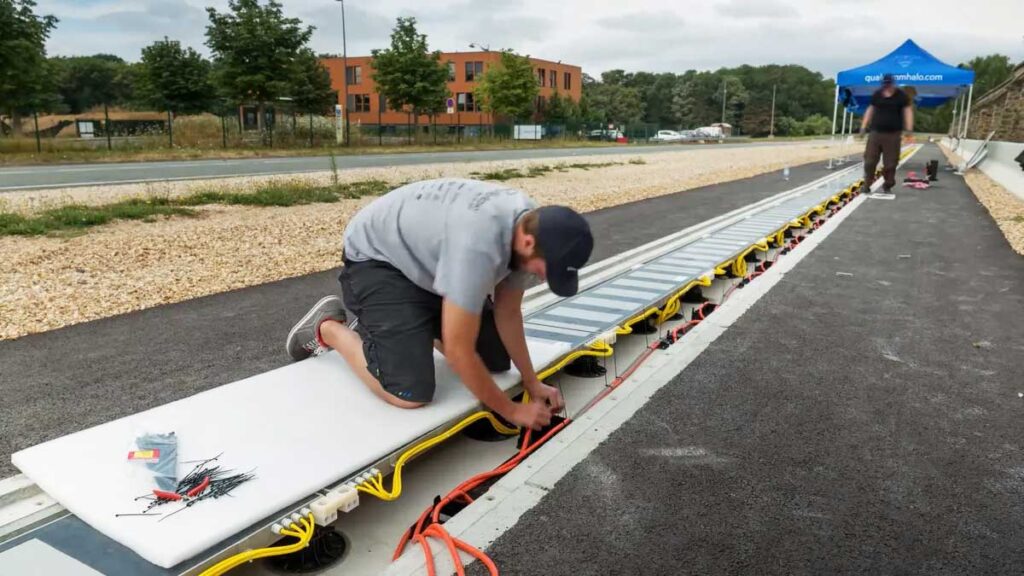
Inductive tracks are a type of electric road system. This system uses a coil buried in the road to charge an electric vehicle’s coil. This system has been in use in Korea since 2010 and has recently been tested in France and Italy. The main advantage of inductive tracks is that they require less maintenance and cleaning. However, when maintenance is required, it can be expensive since the road surface needs to be dug up. The efficiency of inductive tracks depends on how accurately the vehicle aligns with the coils, and it can reach up to 80 percent. However, digging up the road surface is necessary for maintenance, which can be expensive.
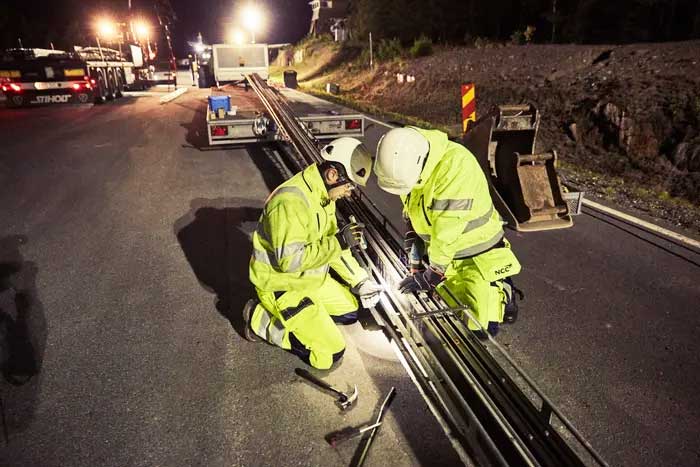
Conductive Track works by transferring energy from a conductive rail embedded in the road to a vehicle equipped with a special arm that connects to the rail. This arm collects the energy and transfers it to the vehicle’s battery, which powers the electric motor. Renewable energy sources such as wind and solar power gave power to rails. This will make the system eco-friendly.“Vehicle electrification is developing quickly”
Advantages of Electric Road System:
The electric road system offers several advantages over traditional charging stations.
- Firstly, it provides a continuous source of power, eliminating the need to stop and charge the vehicle. This means that EVs can travel long distances without the need for large batteries, making them lighter and more efficient.
- Secondly, the electric road system can be used by all types of Electric Vehicles. Regardless of their battery size or charging requirements. This means that the system is flexible and can meet the needs of different types of vehicles.
- Finally, the wireless charging road system is cost-effective. As it reduces the need for large battery packs and expensive charging infrastructure.
Disadvantages of the Electric Road System:
Despite its numerous benefits, the electric road system also has some drawbacks.
- Firstly, the installation cost is high, as it requires a significant amount of infrastructure and retrofitting of existing roads.
- Secondly, the electric road system requires vehicles to have special equipment. Which can be costly and may limit its adoption by consumers.
- Thirdly, the wireless charging road system is only effective on highways and main roads. Which means that it may not be suitable for urban environments.
Future Solutions:
To address these challenges, researchers are exploring new technologies such as wireless charging and battery swapping. Wireless charging uses electromagnetic fields to transfer energy between the road and the electric vehicle. This eliminating the need for physical contact. Battery swapping, on the other hand, involves replacing a depleted battery with a fully charged one. These solutions are still in the experimental stage but show promise for the future.
The world’s first wireless vehicle charging electric road system is an innovative solution to the challenges of electric vehicle adoption. It provides a continuous source of power, is flexible, and cost-effective. However, the system also has some drawbacks, including high installation costs and limited adoption by consumers. Future solutions such as wireless charging and battery swapping may offer more promising alternatives for the future.
Electric roads system offer a way of electrifying road transport that is technically simple and economically sound. The big challenge now is agreeing on a common standard and rolling it out at the federal or continental level.